The Complete Guide to Austria's Wachau Valley Wine Region: Wineries, Trails & Tours
The Complete Guide to Austria's Wachau Valley Wine Region: Wineries, Trails & Tours
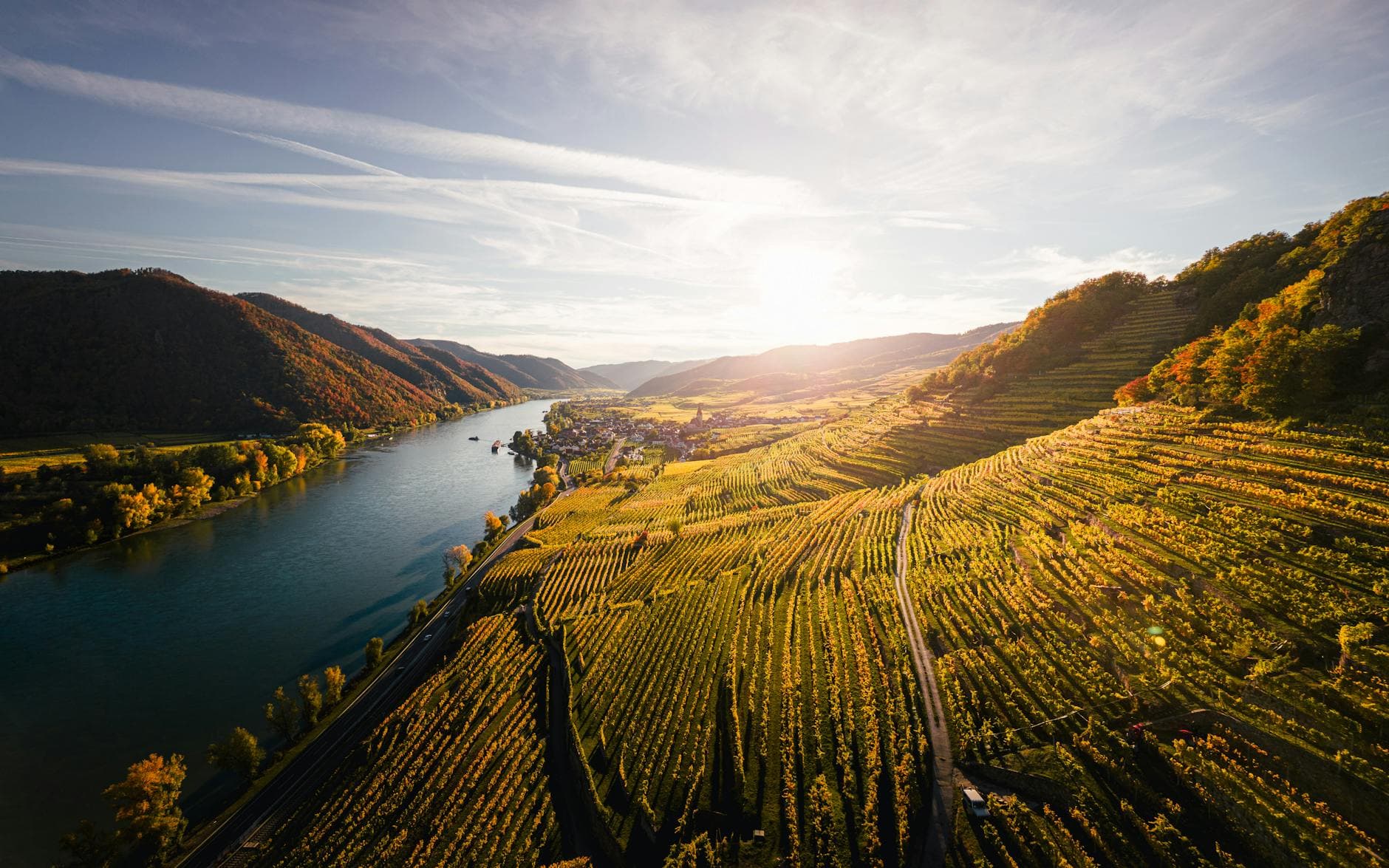
The Wachau Valley is where the Danube River carves through steep, terraced vineyards that have been cultivated since the Roman era. This 36-kilometre stretch between Melk and Krems in Lower Austria produces some of Europe's most distinctive white wines -- mineral-driven Gruner Veltliners and aromatic Rieslings that rival anything from Alsace or Germany's Rheingau.
UNESCO listed the Wachau as a World Heritage Site in 2000, and one visit explains why. Apricot orchards line the valley floor, medieval ruins crown the hilltops, and centuries-old stone terraces climb slopes so steep that every harvest is done by hand. This is wine country where the landscape, history, and wine are inseparable.
Whether you are planning a day trip from Vienna or a full week exploring Austrian wine regions, this guide covers everything you need: the best wineries to visit, vineyard trails to walk, Danube cruises to take, wines to taste, and practical logistics to get it right.
Why the Wachau Matters
The Wachau is Austria's most prestigious wine region, though it accounts for less than 3% of the country's total vineyard area. What it lacks in volume, it makes up for in concentration and quality. The combination of warm Pannonian air from the east and cool alpine breezes from the west creates dramatic temperature swings that give Wachau wines their signature intensity and acidity.
Unlike most European wine regions, the Wachau operates its own quality classification system -- entirely separate from Austrian wine law. The Vinea Wachau association (founded 1983) grades wines by ripeness and body:
| Classification | Style | Alcohol | Character |
|---|---|---|---|
| **Steinfeder** | Light, delicate | Up to 11.5% | Fresh, crisp, drink young |
| **Federspiel** | Medium-bodied | 11.5-12.5% | Balanced, elegant, versatile |
| **Smaragd** | Full-bodied, powerful | Over 12.5% | Rich, complex, age-worthy |
The names come from local references: Steinfeder is a feathery grass that grows on the terraces, Federspiel refers to falconry (once practised on the cliffs), and Smaragd is the emerald lizard that basks on the warm terrace walls. Ask for these terms at any Wachau tasting and you will immediately sound like someone who has done their homework.
The Wines: What to Taste
Gruner Veltliner
Austria's signature grape dominates the Wachau. At its best, Wachau Gruner Veltliner is nothing like the simple, peppery versions you find elsewhere in Austria. Here, the terraced vineyards and ancient soils produce wines with real depth -- stone fruit, white pepper, a saline mineral edge, and the kind of weight that stands up to serious food.
What to look for: Federspiel Gruner Veltliner is the sweet spot for most visitors -- enough body to be interesting, enough freshness to drink all afternoon. Smaragd bottlings from top sites like Achleiten, Kellerberg, and Loibenberg are age-worthy wines that compete with Grand Cru Burgundy for complexity (at a fraction of the price).
Best value bottles: EUR 10-18 for Federspiel, EUR 18-35 for Smaragd at cellar door.
Riesling
Wachau Riesling is bone-dry, taut, and intensely mineral -- closer in style to Alsace than to Germany's sweeter expressions. The steep, south-facing terraces above the Danube (particularly around Durnstein and Loiben) produce Rieslings with razor-sharp acidity and flavours of citrus peel, flint, and crushed rock.
What to look for: Smaragd Riesling from single vineyards is the pinnacle. The Kellerberg vineyard (Durnstein) and Steinriegl (Loiben) are considered among Austria's greatest Riesling sites.
Best value bottles: EUR 12-20 for Federspiel, EUR 22-45 for single-vineyard Smaragd.
Other Varieties
While Gruner Veltliner and Riesling dominate, look for:
- Neuburger -- a rare, soft white grape almost exclusive to the Wachau. Nutty, honeyed, and worth trying.
- Zweigelt and Blauer Burgunder (Pinot Noir) -- a small amount of red wine is produced, mainly for local consumption.
- Apricot brandy (Marillenbrand) -- not wine, but the Wachau's famous apricots make exceptional fruit brandy. Every second shop in Durnstein sells it.
Top Wineries to Visit
Domane Wachau
The region's largest producer and an excellent starting point. Located in Durnstein, the modern tasting room overlooks the Danube and offers flights across all three quality levels. The cooperative represents over 250 growers, so the range covers every style from simple Steinfeder to powerful single-vineyard Smaragd. Tours run daily; no appointment needed for the tasting room.
Tasting fee: EUR 8-15 for guided flights. Must-try: Smaragd Gruner Veltliner "Kellerberg."
Weingut F.X. Pichler
Arguably the Wachau's most prestigious estate. Franz Xaver Pichler's wines are benchmarks for Austrian fine wine -- the Smaragd bottlings from Kellerberg and Loibenberg are legendary. The winery is in Loiben and visits are by appointment only. Book well in advance; this is a pilgrimage for serious wine lovers.
Tasting fee: EUR 20-30. Must-try: Smaragd Gruner Veltliner "M" (Monumentalwein).
Weingut Knoll
A family estate in Loiben producing traditional, no-frills wines that let the terroir speak. Emmerich Knoll's Rieslings from the Schutt and Kellerberg vineyards are considered among Austria's finest. The tasting experience is personal and unpretentious -- you taste in the cellar with the family.
Tasting fee: EUR 10-15. Must-try: Smaragd Riesling "Schutt."
Weingut Nikolaihof
The oldest winery in Austria -- documentary evidence dates it to 985 AD. Now run biodynamically by the Saahs family, Nikolaihof produces age-worthy wines from some of the Wachau's most historic vineyards. The Romanesque cellar is extraordinary. Visits by appointment.
Tasting fee: EUR 15-25. Must-try: Riesling "Vom Stein."
Weingut Prager
Located in Weissenkirchen, Prager makes some of the most consistent wines in the region. The terrace tasting room has panoramic views over the Danube valley. Less intimidating than F.X. Pichler and more personal than Domane Wachau -- a great middle ground.
Tasting fee: EUR 10-20. Must-try: Smaragd Riesling "Steinriegl."
<!-- AffiliateToursWidget: Wachau Valley wine tours - position after wineries section -->
Pro tip: Many smaller estates (called Heurigen or Buschenschanken) open their doors seasonally for tastings with simple food -- cold meats, cheese, bread, and their own wines. These are the most authentic tasting experiences in the valley. Look for the pine branch (Buschen) hung above the door, which signals the estate is currently open.
Vineyard Trails & Walks
The Wachau is one of the few wine regions where walking among the vineyards is genuinely spectacular. The steep terraces, Danube views, and medieval ruins make every trail feel like a postcard.
Welterbesteig (World Heritage Trail)
The premier long-distance trail runs 180 km along both banks of the Danube through the entire Wachau. You do not need to walk the whole thing -- the best wine-focused sections are:
- Durnstein to Weissenkirchen (8 km, 2-3 hours): Through terraced vineyards above the Danube with views of the castle ruins. Pass through the Achleiten and Kellerberg vineyard sites that produce some of the valley's greatest wines.
- Spitz to Durnstein (12 km, 3-4 hours): Follows the northern bank through apricot orchards and vineyards. The Tausendeimerberg ("Thousand Bucket Mountain") viewpoint is worth the climb.
Rotes Tor Trail (Durnstein)
A shorter loop (4 km, 1.5 hours) that climbs from Durnstein through the vineyards to the castle ruins where Richard the Lionheart was imprisoned in 1192. The panoramic view from the top -- across the Danube to the southern vineyards -- is the most photographed scene in the Wachau.
Joching Vineyard Walk
An easy, flat walk through the vineyards between Joching and Weissenkirchen (3 km, 45 minutes). Informational signs explain the terroir, grape varieties, and stone-wall terrace construction. Ideal for those who want vineyard scenery without steep climbs.
Danube River Experiences
<!-- AffiliateToursWidget: Danube river cruises Wachau - position before Danube section content -->
DDSG Blue Danube Cruises
The most popular way to see the valley from the water. Regular services run between Krems and Melk (April-October), stopping at Durnstein, Spitz, and other villages. The full journey takes about 3.5 hours downstream (Melk to Krems) or 5.5 hours upstream.
Cost: EUR 28-35 one-way, EUR 38-48 return. Bikes travel free.
Recommendation: Take the boat one direction and cycle or take the bus back. Downstream (Melk to Krems) is faster and you face the southern terraces.
Cycling the Danube Path
The Donauradweg (Danube Cycle Path) through the Wachau is one of Europe's most famous cycling routes. The section from Melk to Krems is flat, well-paved, and follows the river through villages and vineyards. Bike rental is available in both towns (EUR 15-25/day).
Distance: 36 km one-way. Allow 3-5 hours with stops for tastings and lunch.
Kayaking
For a more intimate river experience, kayak rentals are available in Krems and Spitz. Paddling downstream through the valley gives you a perspective that no road or trail can match. The current does most of the work.
Cost: EUR 30-50 for a half-day rental with downstream pickup.
When to Visit
| Season | Weather | Crowds | Experience |
|---|---|---|---|
| **April-May** | Mild (12-20C), apricot blossoms | Low-medium | Spring flowers, quiet villages, new vintage release |
| **June-August** | Warm (22-30C), occasional heat | High | Full services, longest days, harvest prep |
| **September-October** | Warm days, cool nights (10-22C) | Medium-high | Harvest season, grape picking, golden light |
| **November** | Cool (5-12C), fog possible | Very low | New wine (Sturm), atmospheric, many closures |
| **December-March** | Cold (0-8C) | Very low | Some wineries closed, Christmas markets in December |
Best time to visit: Late September to mid-October is ideal -- harvest is underway, the terraces glow golden, temperatures are comfortable, and the new wine season (Sturm and Heuriger) begins. The valley is busy but not overcrowded.
Second-best: May to early June, when apricot trees blossom, the vines are lush green, and tourist crowds have not yet peaked.
Avoid: August can be uncomfortably hot and very crowded. Mid-winter sees many estate tasting rooms closed.
Getting There
From Vienna
The Wachau is 80 km west of Vienna -- an easy day trip or a short transfer to begin a longer stay.
- Car: 75 minutes via the A1 motorway to Melk or the S5/S33 to Krems. Parking is available in all towns (EUR 3-8/day).
- Train: Direct trains from Wien Franz-Josefs-Bahnhof to Krems (75 minutes, EUR 18-22 one-way). From Krems, buses connect to Durnstein, Spitz, and other villages.
- Organised tour: Day tours from Vienna to the Wachau run EUR 70-120 per person and typically include transport, 2-3 tastings, and lunch. Convenient but less flexible than self-drive.
<!-- AffiliateToursWidget: Vienna to Wachau Valley day tours - position in Getting There section -->
From Salzburg
The Wachau is about 230 km east of Salzburg (2.5 hours by car). This works well as a stop between Salzburg and Vienna, breaking the journey with a night in the valley.
From Munich
Approximately 350 km (3.5 hours by car). The drive follows the motorway through Linz and is straightforward.
Where to Stay
Durnstein (Best for First-Time Visitors)
The most picturesque town in the valley. The blue church tower, castle ruins, and cobblestone lanes make it the Wachau's postcard image. Hotels and restaurants are clustered along the main street. It is touristy during the day, but evenings are quiet and magical.
Stay here if: You want to be in the centre of things with walking access to top vineyards.
- Schloss Durnstein -- a castle hotel overlooking the Danube. Terrace restaurant, pool, wine cellar. EUR 180-350/night. The splurge option.
- Richard Lowenherz Hotel -- named after the imprisoned king. Central location, good restaurant. EUR 120-220/night.
- Gasthof Blauer Hecht -- traditional guesthouse, excellent value. EUR 70-110/night.
Weissenkirchen (Best for Wine Purists)
A quieter village surrounded by some of the Wachau's best vineyards. Less touristy than Durnstein, with a strong concentration of family-run wine estates offering tastings and seasonal Heurigen.
Stay here if: Wine is your primary focus and you prefer quiet evenings.
- Raffelsberger Hof -- boutique hotel in a 16th-century building. EUR 130-230/night.
- Weinberghof Fritsch -- stay at a working winery. Tastings included. EUR 80-140/night.
Krems (Best for Urban Convenience)
A proper town with shops, restaurants, and a vibrant Altstadt (old town). Better infrastructure than the smaller villages, and the gateway to the Kamptal wine region next door.
Stay here if: You want more dining options and plan to explore Kamptal as well.
- Steigenberger Hotel & Spa -- modern hotel on the Danube. EUR 140-250/night.
- Arte Hotel Krems -- contemporary design, central. EUR 90-160/night.
Practical Tips
- Book Heuriger meals -- These seasonal wine taverns serve cold buffets alongside estate wines. The food is simple but excellent. Check opening schedules in advance; not all operate year-round.
- Learn the local pronunciation -- "Wachau" is pronounced "VAH-kow." Gruner Veltliner is "GROO-ner VELT-lee-ner." Using the correct pronunciation earns genuine respect at tastings.
- Combine with Kamptal -- The Kamptal wine region (centred on Langenlois) is just 15 km north of Krems. It produces similar varietals in a different terroir and is less crowded. A day in each region gives you a complete picture of Austrian fine wine.
- Bring cash -- Smaller estates and Heurigen often do not accept cards. ATMs are available in Krems, Durnstein, and Spitz.
- Buy wine to take home -- Wachau wines are difficult to find and expensive outside Austria. Cellar door prices are significantly lower than export prices, especially for Smaragd bottlings. Most estates will ship within the EU.
- Try apricot everything -- Wachau apricots (Marillen) are famous across Austria. Apricot dumplings (Marillenknodel), apricot jam, apricot brandy, apricot liqueur -- the valley celebrates this fruit as enthusiastically as it celebrates wine.
- Respect the terraces -- The dry stone wall terraces are UNESCO-listed cultural heritage. Stay on marked paths when walking through vineyards, and never climb the walls.
Budget Summary
| Category | Budget | Mid-Range | Luxury |
|---|---|---|---|
| Accommodation/night | EUR 60-100 | EUR 120-220 | EUR 250-400 |
| Meals/day | EUR 25-45 | EUR 50-90 | EUR 100-200 |
| Tastings/day | EUR 10-20 | EUR 25-50 | EUR 50-100 |
| Transport/day | EUR 10-20 (bus/bike) | EUR 20-40 (car) | EUR 40-120 (tours/boats) |
| **Daily total** | **EUR 105-185** | **EUR 215-400** | **EUR 440-820** |
A weekend in the Wachau (2 nights) is comfortably achievable for EUR 400-600 per person at mid-range, including accommodation, tastings, meals, and transport from Vienna.
More Austrian Wine Travel Guides
- Wachau Valley Wine Route
- Austria Wine Regions
- Kamptal Wine Guide
- Where to Stay in Rhine Valley -- for comparison with German Riesling regions
- Old World vs New World Wine Regions
Word Count: ~2,200
Last Updated: February 2026
Author: WineTravelGuides Editorial Team
Wine Travel Inspiration
Get exclusive wine region guides, insider tips, and seasonal recommendations delivered to your inbox.
No spam. Unsubscribe anytime. We respect your privacy.
Plan Your The Complete Guide to Austria's Wachau Valley Wine Region: Wineries, Trails & Tours Wine Country Stay
From boutique vineyard hotels to charming B&Bs, find the perfect base for exploring The Complete Guide to Austria's Wachau Valley Wine Region: Wineries, Trails & Tours's wine region.
Find AccommodationsBook Your The Complete Guide to Austria's Wachau Valley Wine Region: Wineries, Trails & Tours Wine Country Stay
Compare prices on hotels, vineyard B&Bs, and vacation rentals near the best wineries in The Complete Guide to Austria's Wachau Valley Wine Region: Wineries, Trails & Tours.
Search Hotels on Booking.comCategories
Wine Travel Inspiration
Get exclusive wine region guides, insider tips, and seasonal recommendations delivered to your inbox.
No spam. Unsubscribe anytime. We respect your privacy.